







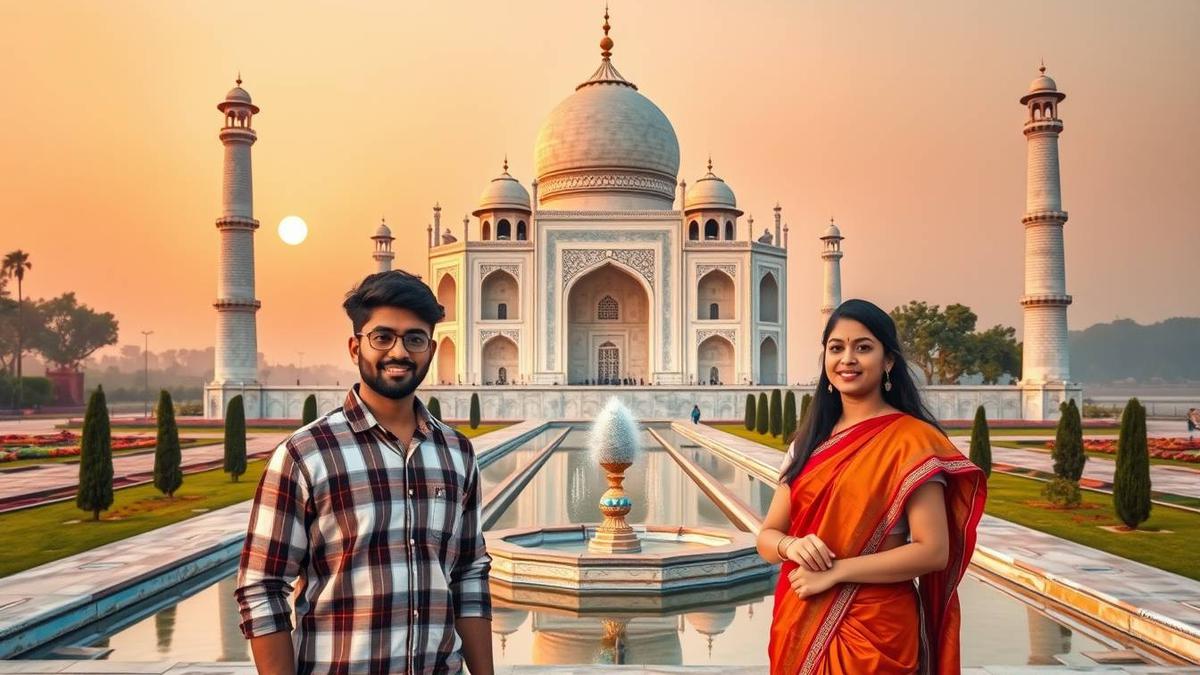
A monument that symbolizes eternal love, the Taj Mahal has long captured the hearts of millions of people around the world. Its stunning architectural beauty and the romantic story of its construction have made it one of the most famous wonders of the world. But what is the Taj Mahal? From its rich history to the incredible uniqueness of its architecture, let’s learn more about this iconic landmark.

The Taj Mahal, which means “Crown of Palaces” in Persian, is a magnificent monument located on the banks of the Yamuna River in Agra, India. Built in the 17th century, the Taj Mahal is a masterpiece of Mughal architecture, combining elements of Islamic, Persian, Ottoman, Turkish, and Indian architecture. Widely known as a symbol of eternal love, this monument was built by Emperor Shah Jahan in memory of his beloved wife, Mumtaz Mahal.

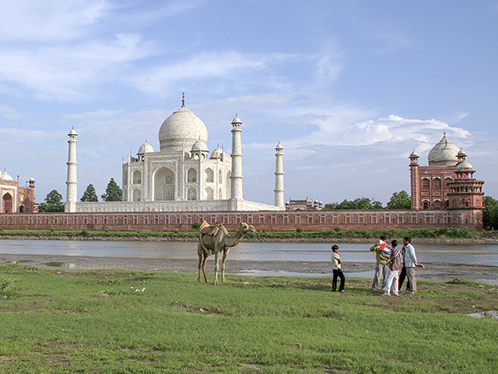
Structurally, the Taj Mahal is a complex of several buildings, the central axis of which is the main mausoleum. The shrine is surrounded by four towers (minarets) at each corner, and on the western and eastern sides there is a mosque and a guest house (jawab). The entire complex is surrounded by a beautiful garden in the Persian style called Charbagh.
The Taj Mahal is not just a building; it embodies many aspects of culture, history, and art. These monuments reflect the sophistication of architecture and construction techniques of the period and are a testament to the wealth and power of the Mughal Empire. It boasts exceptional aesthetic beauty with white marble adorned with intricate carvings and precious stones, and is considered one of the most beautiful buildings in the world.
The Taj Mahal, designated a UNESCO World Heritage Site in 1983, is significant not only in India but also worldwide, recognized as one of the greatest achievements in architecture and urban design. The monument attracts millions of visitors each year, making it one of the most popular tourist destinations in the world and an undisputed symbol of India.
The story of the Taj Mahal begins with the deep love between Mughal Emperor Shah Jahan and his beloved wife Arjumand Banu Begum (better known as Mumtaz Mahal). Their marriage in 1612 marked the beginning of a relationship that would forever change the architectural landscape of India.
Mumtaz Mahal, whose name means “jewel of the palace”, was a faithful companion of Shah Jahan and often accompanied him on various military campaigns. In 1631, Mumtaz Mahal died while giving birth to her 14th child. Her tragic death left a deep pain in Shah Jahan’s heart, and he decided to build a very beautiful monument as a final tribute to his wife.
Construction of the Taj Mahal began in 1632, a year after the death of Mumtaz Mahal. Shah Jahan brought together the best architects from across the empire and even from abroad. Although Professor Ahmad Lahori is considered the chief architect, many other experts also contributed to the design and construction.
The Taj Mahal took about 22 years to build, employing over 20,000 workers from India, Persia, Europe, and the Ottoman Empire. The building materials were sourced from various regions. It features white marble from Makrana in Rajasthan, gemstones from all over Asia, and 28 types of precious and semi-precious stones used in the inlay.
During its construction, Shah Jahan was actively involved in all aspects of the design and construction. He wanted perfection in every detail, from the proportions of the building to the smallest decoration. This precision and dedication is reflected in the exquisite beauty and balance of the Taj Mahal’s architecture.
Surprisingly, Shah Jahan was unable to admire his masterpieces in his freedom. In 1658, he was overthrown by his son Aurangzeb and imprisoned in Agra Fort. It is said that Shah Jahan spent the rest of his life gazing at the Taj Mahal from the window of his prison, before being buried next to Mumtaz Mahal after his death in 1666.
The story of the Taj Mahal did not end with the death of Shah Jahan. Over the centuries, the monument witnessed various historical events. In the 18th century, when the Mughal Empire was in decline, the Taj Mahal was neglected and even looted. The jewels that adorned the walls were stolen, and the gardens were in disarray.
During the British colonial era in India, Lord Curzon, who served as Viceroy of India in the early 20th century, initiated a massive restoration project to restore the Taj Mahal to its former glory. These efforts included renovating the garden, cleaning the marble, and replacing lost gems.
Since India gained independence in 1947, the Taj Mahal has become a symbol of national pride and an important cultural heritage. The Indian government continues its efforts to preserve and preserve the Taj Mahal, making it one of the best-preserved monuments in the world.
Today, the Taj Mahal stands as a silent testament to the story of eternal love, the grandeur of the Mughal Empire, and the architectural genius of humanity. Its romantic yet tragic history and unparalleled architectural beauty have captured the hearts of millions of visitors around the world, making it more than just a building, but a living legend.
The Taj Mahal is the pinnacle of Mughal architecture, combining the best elements of Persian, Islamic, Indian, and even European architecture. Due to its beauty and perfect balance, the building is considered one of the masterpieces of world architecture.
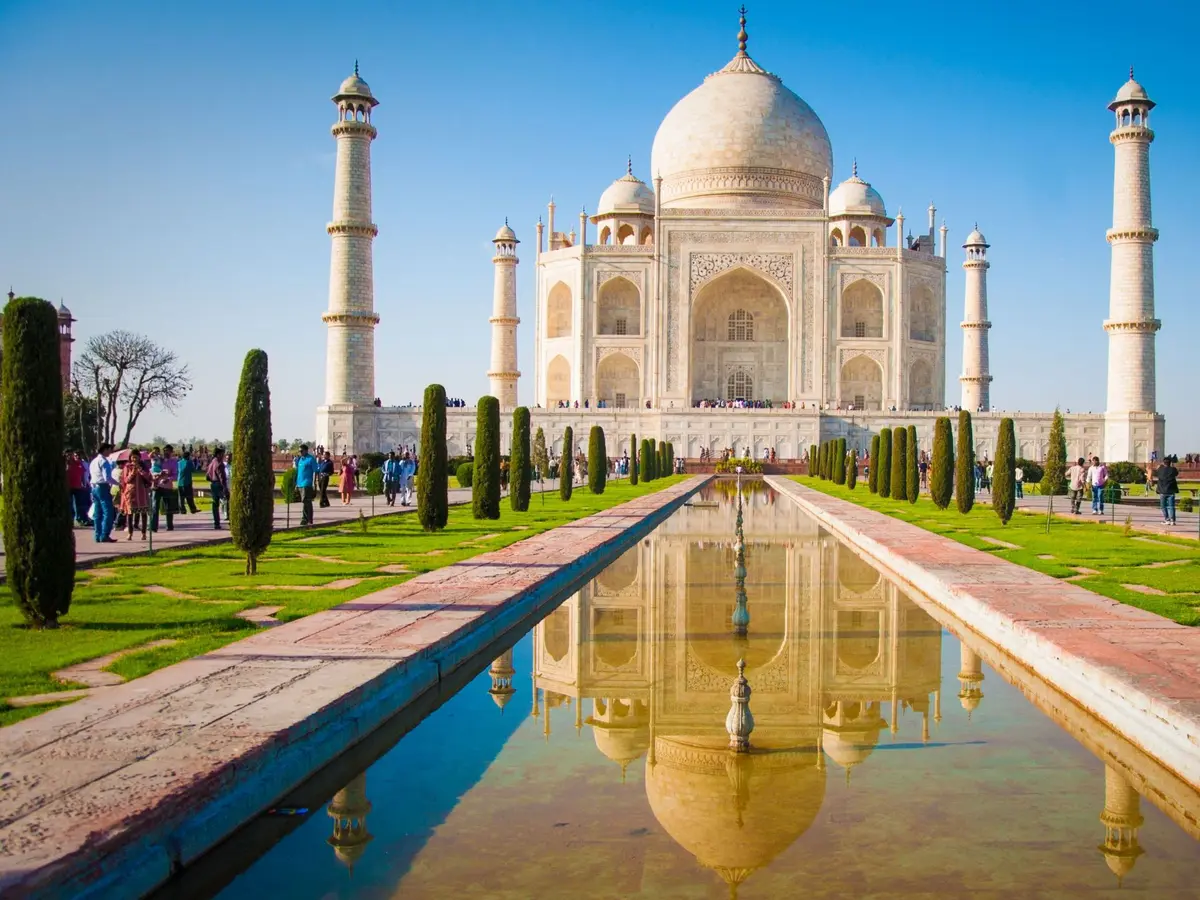
The main structure of the Taj Mahal is a truncated cubic mausoleum, forming an irregular octagon. The building stands on a hill with four identical spires at each corner. The magnificent onion-shaped main dome, topped with a lotus-shaped crown, is the Taj Mahal’s most famous feature.
One of the most striking aspects of the Taj Mahal’s construction is its use of the principle of perfect symmetry. The entire complex is designed symmetrically, with the mausoleum at its center. Even the mosques located to the west have their counterparts to the east to maintain visual balance.
The facade of the Taj Mahal is distinguished by its intricate carvings and inlays. The main gate and other parts of the building are decorated with verses from the Quran, and intricate floral and geometric motifs add to the visual beauty of the building. The art of inlay, where precious stones are cut and set into marble to form intricate designs, reached its zenith in the Taj Mahal.
The Taj Mahal’s natural ventilation system is another architectural innovation. The structure of the building ensures smooth air circulation, maintaining a cool temperature inside even in the hot summer. In addition, the use of white marble not only adds to its beauty, but also helps maintain the internal temperature by reflecting the sun’s heat.
The spires at the corners of the Taj Mahal are not just decorative elements. The tower leans slightly outward, an innovative design that allows the tower to separate from the main building in the event of an earthquake, protecting the shrine.
The Char Bagh Gardens surrounding the Taj Mahal are a fine example of Persian gardens. The garden is divided into four sections by water channels, which are not only aesthetic but also symbolize paradise.
The architectural grandeur of the Taj Mahal lies in its ability to change color throughout the day. The white marble reflects sunlight and moonlight differently, creating the illusion of changing colors: soft pink at dawn, radiant white at noon, and golden in the moonlight.
Overall, the design of the Taj Mahal is considered a perfect harmony of beauty, symbolism, and function. Every element, from the grand scale to the smallest details, was carefully crafted to create a monument that would be not only visually beautiful, but also rich in meaning and technical innovation. This is what makes the Taj Mahal not just a building, but a living work of art that will inspire and amaze people for generations to come.
The construction of the Taj Mahal required a variety of high-quality materials and advanced construction techniques of the time. The choice of materials and construction methods was aimed not only at creating visual beauty, but also at ensuring the durability of the structure for centuries.
The main material for the construction of the Taj Mahal is white marble from Makrana in Rajasthan. This marble is known for its high quality and ability to reflect light, giving the Taj Mahal a unique splendor. More than 28 types of precious and semi-precious stones were used in this inlay, including jasper from Punjab, jade and crystal from China, turquoise from Tibet, lapis lazuli from Afghanistan, rubies from Sri Lanka and agate from Arabia.
The foundation of the Taj Mahal was built using a well-designed foundation system. That is, they dug a large pit and filled it with stones to create a strong foundation on which to build the structure. This technology allows the building to withstand ground movements and floods caused by the nearby Yamuna River.
One of the most impressive aspects of the Taj Mahal’s construction was the use of brick-based reinforcement, rather than the wooden reinforcement that was common at the time. This allowed the construction of large domes without leaving any marks on the marble structure. After construction was completed, the scaffolding was dismantled brick by brick.
The technique of pietra dura, which involves embedding precious stones in marble to create intricate patterns, reached an unprecedented level of sophistication at the Taj Mahal. Artisans cut the precious stones into precise shapes and incised them into the marble with incredible precision, creating beautiful floral and geometric patterns.
The main dome of the Taj Mahal was built using a technique called double dome. It consists of a visible outer dome and a smaller inner dome with a space created between the two domes. These designs not only enhance the visual dimension, but also help improve internal acoustics and ventilation.
A complex hydraulic system is used to distribute water throughout the complex, including the garden’s reflecting pools and water channels. This is not only for aesthetic purposes, but also helps maintain the humidity necessary to preserve the marble structure.
The architects of the Taj Mahal took into account the effects of time and weather when building it. The corner towers are slightly tilted outward, which prevents them from falling from the main structure in the event of an earthquake.
The construction process involved the use of large earthen ramps to move heavy materials into the structure as construction progressed. This allowed for the handling of large marble blocks without damaging the finished surface.
The calligraphy that adorns the Taj Mahal is created using a unique technique. The letters were carved into marble and then filled with black stone, creating a beautiful contrast with the white marble. The font size increases slightly with height, creating a visual illusion of uniformity when viewed from below.
The entire process of building the Taj Mahal demonstrates an exceptional level of craftsmanship and innovation. Carefully selected materials, advanced construction techniques, and exceptional attention to detail create monuments that are not only aesthetically pleasing, but also durable and functional. This is what makes the Taj Mahal not just a building, but also a testament to the excellence of human engineering and architectural art.
The Taj Mahal is not only a magnificent architectural monument, but also carries deep symbolism and spiritual meaning. Every aspect of the design and decoration carries meaning beyond its external beauty, reflecting complex philosophical and religious concepts.
One of the most important symbolic elements is the concept of paradise on earth. The Char Bagh gardens surrounding the Taj Mahal were designed to symbolize paradise in Islam and are divided into four parts by four rivers of milk, honey, wine and water. This reflects the paradise described in the Quran, and the Taj Mahal is not just a tomb, but a representation of paradise on earth.
The main onion-shaped dome of the Taj Mahal symbolizes the cosmic mountain in Islamic cosmology. It is considered the point where earth and sky meet, and symbolizes the spiritual journey of the soul into eternity. The lotus-shaped crown on the dome adds to this spiritual dimension. The lotus flower is often associated with purity and enlightenment in various spiritual traditions.
The use of calligraphy in the Taj Mahal’s design is not only an aesthetic element, but also carries a deep spiritual message. The Quranic verses carved throughout the building are not only visually beautiful, but also convey messages about life, death, and the afterlife. One of the most famous inscriptions calls on believers to enter paradise, emphasizing the theme of paradise on earth.
The perfect symmetry in the design of the Taj Mahal also has symbolic significance. In Islam, symmetry is often associated with the balance and harmony that God created in the universe. This balance is reflected in all aspects of the Taj Mahal. From the overall design to the smallest details, it symbolizes the perfection of divine creation.
The predominant white color of the Taj Mahal has symbolic significance. In many traditions, including Islam, white symbolizes purity, cleanliness, and peace. The extensive use of white marble can be seen as an expression of Shah Jahan’s pure love for Mumtaz Mahal, as well as his desire for peace of mind after death.
The floral and plant motifs that adorn the Taj Mahal are not only decorative. In the Islamic tradition, floral motifs are often used to depict the gardens of paradise. The walls of the Taj Mahal are beautifully carved with flowers and plants, embodying the beauty and abundance of heaven.
The four towers surrounding the main building also have symbolic significance. In addition to their practical function, these towers can be seen as four minarets surrounding the mosque, which emphasizes the spiritual aspect of this landmark. They can be interpreted as the four pillars of Islam, reinforcing the religious identity of the building.
The fact that the Taj Mahal is located on the banks of the Yamuna River has symbolic significance. In many spiritual traditions, rivers are often seen as symbols of the soul’s journey and the transition between life and death. The Taj Mahal’s location on the banks of the river can be interpreted as a symbol of the soul’s final journey into eternity.
The use of gemstones in inlays also has symbolic significance. Each type of stone is associated with certain properties and powers in the spiritual traditions of different cultures. For example, lapis lazuli is often associated with spiritual power, while jade symbolizes eternity.
Overall, the symbolism and spiritual significance of the Taj Mahal create complex and profound meanings. This memorial is not just a tomb or a building, but a powerful philosophical and spiritual statement. The Taj Mahal is a symbol of love that transcends death, the soul’s journey into eternity, and the beauty of an imagined paradise on earth. This is what makes the Taj Mahal so captivating and significant not only for those who admire its external beauty, but also for those who seek a deeper spiritual meaning.
The Charbakh Gardens of the Taj Mahal are one of the most important symbolic elements of the entire complex. Garden design is not just a decoration of the landscape, but also an integral part of the overall architectural and spiritual vision of the Taj Mahal.
Charbagh, which means four gardens in Persian, is a classical Islamic garden style that originated in Persia. The concept is based on the Quranic description of Paradise, from the center of which flow four rivers: water, milk, honey, and wine. The Taj Mahal embodies this concept in a very beautiful and well-planned way.
The Taj Mahal’s Char Bagh gardens are divided into four zones, intersected by water channels, forming four equal zones. At the center of the intersection is a pool of water that acts as a mirror, creating a perfect reflection of the Taj Mahal, a stunning visual effect that adds to the grandeur of the monument.
Each area of the garden is divided into 16 flower beds that form intricate geometric patterns. Plants and flowers are carefully selected for their visual beauty and symbolism. In Islamic tradition, cypress trees, symbolizing death, and fruit trees, symbolizing life, are planted together to create a balance between life and death.
The streams of water flowing through the garden are not only decorative elements but also have a practical purpose. This helps irrigate the gardens and creates a natural cooling effect, making the area a refreshing oasis in the hot climate of Agra.
One of the most impressive aspects of the Charbakhsh Gardens is that they serve as a visual introduction to the Taj Mahal. As visitors walk through the garden, their gaze naturally turns towards the shrine, and the further they walk, the more impressive the view becomes.
The gardens also play an important role in the acoustics of the Taj Mahal’s interior. The combination of plants, water, and open spaces creates a unique acoustic environment that enhances some sounds and attenuates others, enhancing the overall sensory experience of visiting the Taj Mahal.
The gardens we see today have changed somewhat from the original design. For example, although part of the lawn has been converted into flower beds, the essence and symbolism of Charbagh have remained intact. Restoration and maintenance work is underway to ensure that the park remains as close to its original appearance as possible.
The Charbagh Garden also serves a practical function, adapted to the local climate. The plants and water help cool the air and create a more comfortable microclimate, which is especially important in the hot climate of Agra. It shows that garden design can be not only beautiful and symbolic, but also practical.
Overall, the Char Bagh Gardens at the Taj Mahal are a great example of how landscape and architecture can be combined to create an inclusive and immersive experience. It is not just a garden, but an extension of the spiritual and artistic vision of the Taj Mahal. The gardens serve as a bridge between the physical and spiritual worlds, creating a meditative space where visitors can prepare themselves for the grandeur of the Taj Mahal. The Char Bagh Gardens embody the concept of paradise on earth in many ways and are the centerpiece of the entire Taj Mahal complex.
While the exterior of the Taj Mahal has captivated millions of visitors with its stunning beauty, the interior of the monument is no less impressive. Entering the Taj Mahal is like entering a world of extraordinary luxury and artistic sophistication.
The main interior space of the Taj Mahal is a large octagonal room that houses the iconic tombs of Shah Jahan and Mumtaz Mahal. This room is surrounded by corridors and smaller rooms. Every detail of the interior design, from floor to ceiling, demonstrates an incredible level of craftsmanship and meticulous attention to detail.
One of the most striking features of the interior design of the Taj Mahal is the extensive use of the technique of solid stone inlay. This technique involves inlaying precious stones in marble to create intricate and colorful designs. Floral, geometric and linear motifs created in this technique adorn the walls, floors and even monumental inscriptions, creating stunning visual effects.
The ceiling of the main hall is intricately carved and gilded, creating a dazzling shimmering effect. Light streaming through the carved windows creates beautiful shadow patterns on the marble floor, adding a dynamic visual dimension to the space.
The Jalis, or carved screens, form another important feature of the Taj Mahal. These intricately carved marble screens are not only used as a decorative element, but also allow light and air into the room, creating the effect of soft and diffused lighting.
The interior acoustics of the Taj Mahal are also noteworthy. The design of the room and the materials used create a unique echo effect where sounds echo for several seconds. This adds an auditory dimension to the visitor’s experience, creating an almost magical atmosphere.
The monument of Shah Jahan and Mumtaz Mahal, located in the center of the room, is a work of art in itself. The monument is exquisitely decorated with solid stone and inscribed with verses from the Quran and beautiful floral motifs. Interestingly, this monument is only symbolic. In fact, the tomb is underground, inaccessible to the public.
The interior lighting of the Taj Mahal was carefully designed for dramatic effect. Natural light, filtering through carved windows and carved screens, creates a play of light and shadow that changes throughout the day, giving the interior a different feel depending on the time of day.
The calligraphy that adorns the interior of the Taj Mahal is not only visually beautiful, but also carries a deep spiritual message. The beautiful verses of the Quran carved on the walls and monuments emphasize the themes of the Day of Judgment, the rewards of the righteous, and the greatness of God.
While most interior designs feature white marble, the use of gemstones in the inlay creates a vibrant pop of color. Lapis lazuli, jade, crystals, turquoise, and other gemstones create a rich and diverse color palette.
Overall, the interior design of the Taj Mahal is considered to be a perfect balance between luxury and simplicity, thoughtful details and an overall unity of design. From the smallest sculpture to the overall structure of the room, every element comes together to create a space that is not only visually beautiful, but also rich in meaning and symbolism. The interior of the Taj Mahal is not just a physical space, but a profound spiritual and aesthetic experience that further solidifies its status as one of the world’s architectural masterpieces.
Although the main mausoleum, the Taj Mahal, often receives the spotlight, the Taj Mahal complex actually consists of several other important buildings, including a mosque to the west and a Jawab (mirror building) to the east. These two structures play an important role in the overall design and function of the Taj Mahal complex.
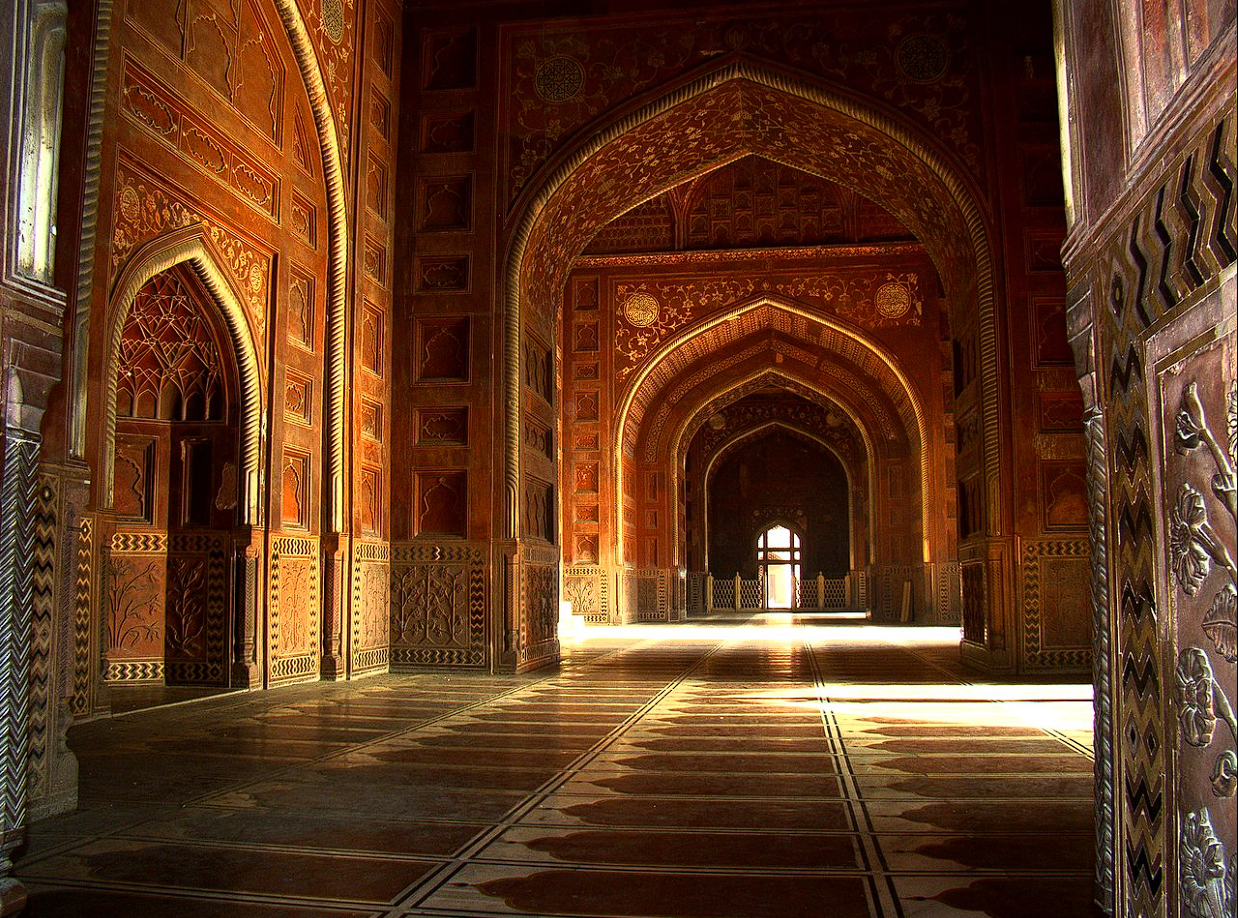
Located to the west of the mausoleum, this mosque is an integral part of the Taj Mahal complex. The mosque is built of red sandstone, which forms an interesting color contrast with the white marble of the main hall. The mosque is not just an architectural decoration, but a functional place for Friday prayers and other religious ceremonies.
The design of the mosque reflects the classic Mughal style, with a large dome in the center surrounded by smaller domes. The facade of the building is decorated with Islamic calligraphy and intricate geometric motifs. The interior of the mosque, although not as elaborate as the main hall, is decorated with beautiful carvings and inlays.
One of the unique features of this mosque is the mihrab, which points towards Mecca. The mihrab is decorated with intricate jewelry, providing a beautiful focal point for worshippers. The mosque’s floor plan is designed with a pattern that defines space for 569 prayer rugs, indicating the mosque’s maximum capacity.
To the east of the sanctuary is a building called Jawab. The correct answer is a building similar to a mosque in size and design, which in Arabic means the correct answer. However, unlike a mosque, this prayer hall does not have a mihrab and is not used for worship. Its main function is to create perfect visual harmony within the Taj Mahal complex.
This mosque is also built of red sandstone and has the same decorations as the mosque. Although it has no religious function, it is an impressive piece of architecture in its own right. Visitors often use the building as a place to relax and admire the Taj Mahal from a different perspective.
The placement of the mosque and minaret on the western and eastern sides of the shrine achieves a perfect visual balance. It is a magnificent example of the symmetry characteristic of Mughal architecture. When viewed from the main gate, the three buildings – the mosque, the shrine and the Jawab – form a harmonious and balanced silhouette.
In addition to their aesthetic and religious functions, the mosque and the jawab play a practical role in the design of the Taj Mahal complex. These buildings serve as extensions that surround the main shrine, creating visual perspectives that direct the visitor’s gaze towards the main shrine. It also simply helps me manage the flow of visitors.
Interestingly, the mosque is oriented towards Mecca, so it is not exactly next to the main temple. The architects skillfully disguised the imbalance by placing the shrine slightly closer to the edge of the platform, creating the illusion of perfect alignment when viewed from the main entrance.
The mosques and minarets play an important role in the acoustics of the Taj Mahal complex. These places create a unique echo effect that resonates around the shrine, adding an auditory dimension to the visitor’s experience.
Overall, the mosque and minarets are important but often underappreciated components of the Taj Mahal complex. They not only support the building, they are magnificent structures in their own right. Their presence enriches the experience of visiting the Taj Mahal, adding complexity and beauty to an already remarkable monument. The mosque and minarets are a testament to the comprehensive vision of the Taj Mahal’s design, with all elements, large and small, coming together to create a harmonious and stunning whole.
The Taj Mahal is located in the city of Agra, Uttar Pradesh, India. Its strategic location on the banks of the Yamuna River not only provides a beautiful backdrop, but also has profound historical and practical significance.
I think Agra is a city with a rich history and cultural heritage. During the Mughal era, Agra became the capital of the empire and a center of art, culture and architecture. The presence of the Taj Mahal makes Agra one of the most important tourist destinations in India.
The Yamuna River, which flows behind the Taj Mahal, plays an important role in the design and function of the monument. In addition to providing scenic views, the river serves as a source of water for the gardens and complex irrigation systems. In the past, this river was a major transportation route and helped transport building materials during the construction of the Taj Mahal.
The area around the Taj Mahal has changed greatly since its construction in the 17th century. The urban and industrial expansion of Agra has brought new challenges to the preservation of its monuments. Air pollution, especially from nearby industries, poses a serious threat to the Taj Mahal’s white marble, causing discoloration and damage.
To address this problem, the Indian government has taken important steps. The Taj Trapezium, an area of 10,400 square kilometers around the Taj Mahal, has been declared a pollution-free zone. Industries in the region are being urged to switch to cleaner fuels or alternative energy sources.
The gardens surrounding the Taj Mahal are not only an aesthetic sight, but also act as green lungs that help maintain the air quality around the monument. Efforts are being made to preserve and maintain the garden so that it remains healthy and functions optimally.
The location of the Taj Mahal also influences the experience of visitors. The monument can be seen from many angles around Agra, and is especially beautiful at sunrise and sunset. The Mehtab Bagh Gardens, located across the Yamuna River, offer some of the most beautiful views of the Taj Mahal, especially on a full moon night.
The infrastructure around the Taj Mahal has been designed to accommodate the millions of visitors who visit it each year. However, these developments have been carefully implemented to minimize the visual impact on the monument and its surroundings. Parking lots, visitor centers, and other facilities are spaced far enough apart to not obstruct the view and safety of the Taj Mahal.
The presence of the Taj Mahal has had a profound impact on the economy and social life of Agra. The booming tourism industry has created many jobs for locals, from tour guides to artisans who make souvenirs. However, it has also created challenges in terms of visitor management and the preservation of local culture.
Overall, the setting of the Taj Mahal and its surroundings are important factors that cannot be separated from the monument itself. They not only provide the physical and visual context for the Taj Mahal, but also play a significant role in the preservation and appreciation of this monument. Maintaining a balance between cultural heritage preservation, economic development, and environmental protection around one of the world’s most iconic landmarks requires ongoing efforts.
The Taj Mahal has had a profound influence on world architecture since its construction in the 17th century due to its exceptional beauty and architectural sophistication. These influences are not limited to Islamic or Indian architecture, but extend to various architectural styles and traditions around the world.
One of the most important influences of the Taj Mahal is that it has become a benchmark for excellence in monumental architecture. Its perfect balance of grand scale and intricate detail has inspired architects around the world to achieve the same level of beauty and sophistication in their works.
The Indo-Islamic style, embodied in the Taj Mahal, has influenced the design of many buildings around the world. Elements such as onion domes, slender spires, and bejeweled white marble have been adopted and used in a variety of architectural contexts.
In India, too, the influence of the Taj Mahal is evident in many later buildings. The Bibi Ka’s Tomb in Aurangabad, often called the Little Taj Mahal, is a prime example of an attempt to emulate the beauty of the Taj Mahal. Although not as large or elaborate as the original, it demonstrates the strong influence of the Taj Mahal on later Indian architecture.
Even outside India, the influence of the Taj Mahal can be seen in various forms. In Europe, the Orientalist movement of the 18th and 19th centuries was often inspired by the Taj Mahal and other Mughal architecture. Buildings such as the Brighton Pavilion in England, although not modeled after the Taj Mahal, demonstrate the influence of the Indo-Islamic aesthetic that the Taj Mahal promoted.
In the United States, many buildings have been directly influenced by the Taj Mahal. The Trump Taj Mahal Casino Resort in Atlantic City, New Jersey (now closed) is a prime example of an attempt to capture the grandeur of the Taj Mahal in a modern context, but the result is often criticized as an overly artificial imitation.
The influence of the Taj Mahal is evident in the modern architecture of mosques around the world. Many modern mosques use design elements inspired by the Taj Mahal, such as its magnificent white dome and slender minarets.
In landscape architecture, the concept of the horzog used in the gardens of the Taj Mahal has influenced formal garden design in many parts of the world. The principles of symmetry and harmony present in the layout of the Taj Mahal can often be replicated in the design of modern gardens and public spaces.
The influence of the Taj Mahal is not limited to architecture. In the visual arts, the Taj Mahal has been a source of inspiration and motivation for many artists. Motifs inspired by the Taj Mahal’s decorations are often used in the design of products and clothing.
The Taj Mahal has influenced not only aesthetics but also how we see the connection between architecture and emotion. The idea that a building can be a lasting expression of love has inspired many architectural designs that seek to convey similar emotions.
In the context of cultural heritage conservation, the Taj Mahal has become a model for the protection and preservation of historical monuments. The Taj Mahal’s conservation efforts have become a model for conservation projects around the world.
Overall, the impact of the Taj Mahal on world architecture cannot be underestimated. It has become a global icon that transcends cultural and geographical boundaries. Its beauty, elegance, and symbolic significance continue to inspire architects, designers, and artists around the world. The Taj Mahal is not just a building; it is an architectural embodiment of the concepts of beauty, love, and eternity. Its influence will continue to influence architecture and art for generations to come.
Preserving the beauty and integrity of the Taj Mahal is no easy task. As a monument that is over 350 years old, the Taj Mahal faces numerous conservation challenges that require ongoing and innovative efforts. Efforts to preserve and restore the Taj Mahal include various aspects, from physical maintenance to addressing environmental concerns.
One of the biggest problems in the preservation of the Taj Mahal is the impact of air pollution. The white marble of the Taj Mahal has been discolored, turning yellow or brown due to exhaust fumes from factories and vehicles around Agra. To address this problem, the Indian government has taken strict measures, including imposing restrictions on traffic around the monument and closing or relocating factories that cause pollution in the Taj Mahal area.
An innovative cleaning technique has been developed to restore the original color of the Taj Mahal’s marble. One method is to use a water-based clay. Multani clay is a type of clay that is placed on the surface of the marble to absorb dirt and grime. This process must be done very carefully so as not to damage the delicate marble.
Another challenge we face is structural deterioration due to aging and environmental factors. The Taj Mahal’s foundation, built on the banks of the Yamuna River, is vulnerable to erosion and changing water levels. Experts are constantly monitoring the stability of the structure and making necessary repairs to ensure the integrity of the building.
Restoring the architectural details of the Taj Mahal has also been a challenge. The repair and maintenance of the intricate sculptures, jewelry, and calligraphy that adorn the monuments require special skills. To this end, the Indian government is working with heritage conservation experts and traditional artisans to ensure that the techniques and materials used are faithful to the original.
Conservation efforts also include the preservation of the gardens and grounds surrounding the Taj Mahal. The Charbagh Garden is not only aesthetically significant, but also serves to protect the monument from pollution and erosion. An extensive tree planting and landscaping program is being carried out to maintain the health of the ecosystem around the Taj Mahal.
Modern technology also plays a major role in environmental conservation efforts. 3D scanning and digital modeling are used to monitor structural changes and plan restoration. A sophisticated environmental monitoring system has been installed to measure pollution levels and other environmental conditions that may affect the monument.
Visitor management is also an important aspect of the Taj Mahal’s conservation. With millions of visitors each year, erosion of tourism due to human trafficking is a serious problem. Measures taken to limit the impact of mass visits include limiting the number of visitors, requiring special footwear, and designating areas accessible to the public.
Public education and awareness are also important parts of environmental protection efforts. Educational programs are being implemented to raise public awareness of the importance of preserving this cultural heritage. This includes information campaigns on the impacts of pollution and the importance of practicing responsible tourism.
International cooperation also plays an important role in the conservation efforts at the Taj Mahal. UNESCO and other international organizations provide technical and financial support to various conservation projects. Sharing knowledge and skills with conservationists around the world helps develop best conservation practices.
The preservation of the Taj Mahal is a huge challenge, but the efforts are yielding positive results. The color of the marble has been improved, its structural integrity has been preserved, and public awareness of the importance of conservation has been raised. However, the preservation of the Taj Mahal is an ongoing process that requires long-term commitment from all stakeholders.
Overall, the efforts to preserve and restore the Taj Mahal are a great example of how to protect and preserve the world’s cultural heritage for future generations. Preserving the building is not everything. It is also important to keep alive the symbols of love, beauty and human achievement that have inspired the world for centuries.
Visiting the Taj Mahal is an unforgettable experience, but there are a few things to keep in mind to get the most out of your visit. This guide will help you plan a smooth and enjoyable visit to one of the New Seven Wonders of the World.
First, it’s important to choose the right time to visit. The Taj Mahal is open every day except Friday, when it’s closed for prayers. Opening hours are from dawn to dusk. Many visitors recommend arriving at dawn to avoid the crowds and midday heat and to watch the marble change colors as the sun rises.
When planning your visit, it’s also worth considering the season. October to March is generally considered the best time to visit the Taj Mahal, as the weather is cool and comfortable. Summer (April to June) can be very hot, and the monsoon season (July to September) can bring heavy rains and make visiting difficult.
Tickets can be purchased at the theatre box office or online. Buying tickets online saves you the time waiting at the box office. There is a difference in ticket prices for Indian citizens and foreign tourists. Children under 15 years of age usually get free tickets. As the number of visitors per day is limited, it is recommended to purchase tickets in advance, especially during peak seasons.
Security at the Taj Mahal is very tight. Visitors must go through a security check before entering the complex. Prohibited items include food, cigarettes, rubber, camera tripods, and sharp objects. Large bags are not allowed, so it is best to bring a small backpack or satchel.
As the Taj Mahal is a sacred site, modest dress is recommended when visiting. Upon entering the main shrine, visitors are asked to remove their shoes or wear shoe covers. The marble floor can get very hot during the day, so it is a good idea to bring an extra pair of socks.
To get the most out of your visit, consider hiring an official guide. They can provide insights into the history and architecture of the Taj Mahal that you wouldn’t get if you were traveling alone. To avoid scams, always hire a guide who is officially licensed by the government.
Photography is permitted in most areas of the Taj Mahal. However, the interior of the main tomb is an exception. However, the use of flash and tripods is prohibited. For the best photos, visit Mehtab Bagh Park on the other bank of the Yamuna River. You can enjoy a beautiful view of the Taj Mahal, especially at sunset.
Make sure to allow plenty of time when you visit. The Taj Mahal can be seen in a few hours, but many visitors spend half a day or more to appreciate its beauty and detail. In addition to the main temple, explore the mosque, minarets, and beautiful gardens.
Hydration is very important, especially in hot weather. Although you are not allowed to bring food and drinks, there are many vendors outside the doors. Bring plenty of water.
Finally, remember to respect the place. The Taj Mahal is not just a tourist attraction, it is also a sacred place and an important symbol of cultural heritage. Respect the rules, maintain cleanliness, and be polite to other visitors and staff.
With proper preparation and an understanding of what to expect, a visit to the Taj Mahal can be a truly unforgettable experience. This memorial is more than just a building, it is an immortal love story set in stone, an architectural masterpiece and a silent testament to a rich history. Every nook and cranny tells a story, and this guide will prepare you to discover the wonders of the Taj Mahal.
Choosing the best time to visit the Taj Mahal can greatly impact your experience. Factors such as weather, crowds, and lighting conditions will influence your choice of the best time to visit.
Generally, the best time to visit the Taj Mahal is considered to be winter (October to March). During this period, Agra has cool and comfortable weather with temperatures ranging from 10°C to 30°C. The clear skies and fresh air during this period create ideal conditions for admiring the beauty of the Taj Mahal and taking wonderful photographs.
But keep in mind that this is peak tourist season, especially during the Christmas and New Year holidays. If you visit the city during this period, be prepared for large crowds and higher accommodation prices.
Summer in Agra (April to June) is very hot, with temperatures often exceeding 40°C. While this is not the ideal time for most tourists, there are several advantages to visiting the Taj Mahal during the summer months. There are relatively fewer people and accommodation is cheaper. If you decide to visit during this season, try to arrive early in the morning or late in the evening to avoid the scorching heat of the day.
Agra experiences heavy rains during the monsoon season (July to September). The rain can disrupt your travel plans, but there is a beauty to seeing the Taj Mahal in such dramatic weather. The overcast, humid sky can make for a great backdrop for photos. But be aware that the high humidity can make flying uncomfortable.
No matter what time of year you choose, the best time to visit the Taj Mahal is at sunrise or sunset. At dawn, as the sun rises, you can see the marble of the Taj Mahal changing from a soft pink to a golden white. This is the quietest time at the memorial, allowing you to enjoy the peace and beauty of the memorial without the crowds.
Sunset is also a beautiful sight, with a soft glow illuminating the Taj Mahal. However, be aware that this is a busy time for visitors, so be prepared for large crowds.
For a truly unique experience, visit the Taj Mahal during a full moon. The Taj Mahal is open for night viewing on the fifth night of every month. The night of the full moon and the two nights before and after (except Fridays and Ramadan). Seeing the Taj Mahal illuminated by the moon is truly a magical and unforgettable experience.
Additionally, the Taj Mahal is closed to the public every Friday due to Friday prayers at the nearby mosque. If your visit to Agra falls on a Friday, you can enjoy a view of the Taj Mahal from the Mehtab Bagh gardens across the Yamuna River.
No matter when you visit, it’s important to be well prepared. Always check the weather before you visit and dress accordingly. If you’re traveling in the summer or rainy season, bring plenty of drinking water, a hat, and sunscreen. In winter, the temperature difference between morning and afternoon can be very large, so having several layers of clothing that you can take off can be very useful.
Finally, remember that every moment you visit the Taj Mahal is magical. Whether it’s the silence of dawn, the splendor of midday, or the magic of a moonlit night, the Taj Mahal is always an amazing experience. If you take these factors into account and plan well, visiting one of the new seven wonders of the world will be an unforgettable experience.
Understanding the Taj Mahal ticketing system and access methods is an important step in planning your visit. Having the right information will help you save time, avoid confusion, and maximize your visit.
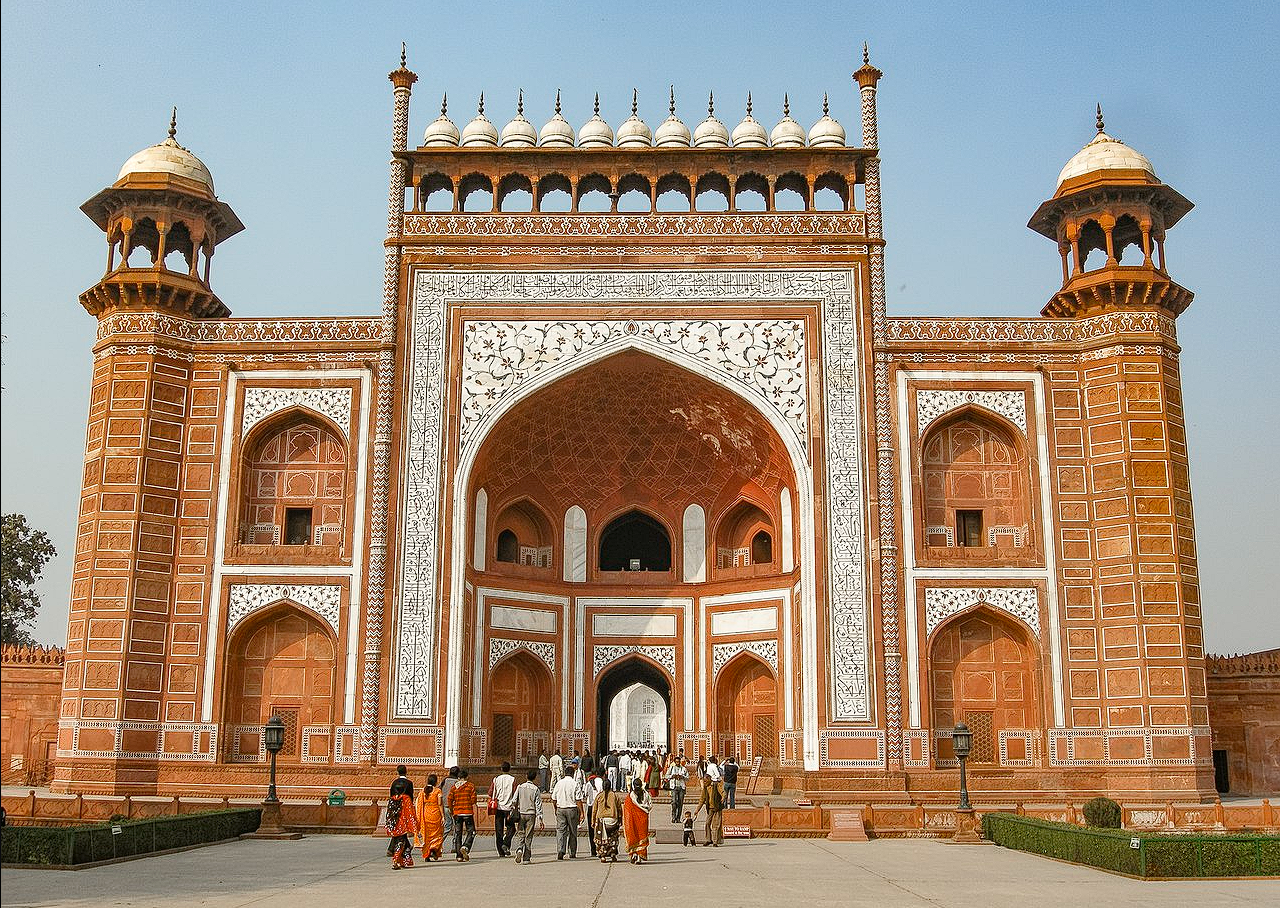
The Taj Mahal has three main entrances: the West Gate, the East Gate, and the South Gate. The West Gate is the most popular and often the most crowded. Dongmun is a good choice if you want to avoid crowds and long lines. The South Gate is usually the quietest and is located not far from the center of Agra.
Taj Mahal entrance tickets are sold in two types: regular and premium tickets. The general ticket provides basic entry to the Taj Mahal complex. Premium tickets are more expensive but offer several benefits, including access to special areas closer to the main sanctuary, shorter lines, and access to golf carts from the gate to the main sanctuary building.
Ticket prices vary depending on the nationality of the visitor. Indian citizens and visitors from SAARC and BBTEC countries pay less than other foreign visitors. Children below 15 years of age, both Indian and foreign, can enter for free.
Tickets can be purchased from the ticket counters located at each entrance. However, to avoid long queues, especially during peak season, it is recommended to purchase tickets online through the official website of the Archaeological Survey of India. To enter, you need to print out your ticket online and carry a valid ID with you.
There is a limit to the number of visitors allowed into the Taj Mahal each day, so it is advisable to buy tickets in advance, especially during peak season, to ensure you arrive on your desired date.
If you want to visit on the night of the full moon, you must purchase your ticket at least 24 hours in advance. The number of visitors during the evening tours is very limited, please book your tickets in advance.
After purchasing a ticket, visitors must go through a strict security check before entering the complex. Food, cigarettes, chewing gum, camera tripods, sharp objects, etc. are prohibited. Large bags are not allowed, so it is best to bring a small backpack or satchel.
To easily reach the Taj Mahal, there are several transportation services available in the area. From the city center of Agra, you can take a taxi, rickshaw, or even a traditional horse-drawn carriage to the Taj Mahal gate. Some hotels also offer shuttle services to the Taj Mahal.
For visitors with disabilities, wheelchair access is available near the entrance. However, their number is limited and will be provided on a first-come, first-served basis. Visitors may also bring their own wheelchairs.
It is important to note that the Taj Mahal, like many other historical sites in India, operates on a two-tiered pricing system. Foreign tourists typically pay significantly more than Indian nationals. Although this is sometimes controversial, the additional revenue from overseas ticket sales is used to preserve and maintain the monument.
Finally, remember that while your ticket will grant you entry into the Taj Mahal complex, some areas may be restricted or require an additional ticket. For example, visitors may need to purchase additional tickets to enter the main building. To avoid any unpleasant surprises, always check the latest information before visiting.
Understanding the Taj Mahal ticketing and accessibility system will help you plan your visit more effectively. While the process of purchasing a ticket and gaining entry may seem complicated, keep in mind that the experience of seeing one of the wonders of the world up close is definitely worth it.
Visiting the Taj Mahal is not only about appreciating its architectural beauty, but also about respecting its cultural and historical significance. Understanding and following the rules of visitation and etiquette will not only ensure a more enjoyable experience, but will also help preserve this landmark for future generations.
One of the most important rules is that you are not allowed to bring any items into the Taj Mahal complex. This includes food and drinks (except water in clear bottles), cigarettes, chewing gum, sharp objects, camera tripods, and large electronic equipment. Large bags are not allowed, so it is best to bring a small backpack or satchel. All items will be checked during security screening, and prohibited items must be stored in special lockers behind the doors.
Modest clothing is highly regarded and sometimes even required. There is no official dress code, but the Taj Mahal is a sacred site and tomb, so visitors should dress appropriately. Overly revealing or provocative clothing may be considered inappropriate.
Visitors are required to remove their shoes or wear shoe covers when entering the main sanctuary. This is to protect the delicate marble floor from wear and tear and damage. The marble floor can get very hot during the day, so it is a good idea to bring an extra pair of socks.
Photography is permitted in most areas of the Taj Mahal, but there are some restrictions. Flashes and tripods are prohibited. Photography is strictly prohibited in the main shrine. Always obey the signs indicating areas where photography is prohibited.
Keeping the peace is an important aspect of visitor etiquette. The Taj Mahal is a place for meditation and reverence. Loud talking, shouting, or other noises are considered rude and may disturb other guests.
Any form of vandalism is strictly prohibited and violators will be subject to severe punishment. This includes writing on the walls, carving names on any surface, or taking any part of the monument as a souvenir. Remember that even the smallest act of vandalism can cause irreversible damage to this historic building.
Smoking and alcohol consumption are strictly prohibited throughout the Taj Mahal complex. This is not only to maintain the cleanliness and beauty of the site, but also to respect the sacred nature of the attraction.
Visitors must follow designated routes and avoid entering restricted areas. For heritage or security reasons, some areas of the complex may be off-limits. Always follow the directions of security personnel and official instructions.
Tipping guides or Taj Mahal staff is discouraged, and in some cases may be prohibited. If you want to reward good service, consider giving a positive review to the relevant organization.
It is also important to respect the nature and environment around the Taj Mahal. Please do not leave any litter and use the designated dustbins. Please do not feed any wild animals you come across in the complex. This can disrupt the natural ecosystem.
Finally, remember that the Taj Mahal is not just a tourist attraction, but a sacred place and an important symbol of cultural heritage. I ask that you respect not only the memorial itself, but also other visitors who have a spiritual and emotional connection to this place.
By following these rules and etiquette, you will not only make your visit more enjoyable and meaningful, but you will also contribute to preserving the Taj Mahal for future generations. Remember, every visitor has a role to play in preserving the beauty and integrity of one of the Seven Wonders of the World.
Choosing the right accommodation can make a big difference to your experience visiting the Taj Mahal. Agra is the city that is home to one of the Seven Wonders of the World and offers a wide range of accommodation options to suit every taste and budget.
For those looking for a luxurious experience, there are several five-star hotels near the Taj Mahal. These hotels often offer direct views of the monument, allowing you to admire the beauty of the Taj Mahal from your room. Some of the popular hotels, including the Oberoi Amarvilas, Taj Hotel & Convention Center, and ITC Mughal, offer first-class amenities and excellent service. Although they are expensive, staying at one of these hotels is often a memorable part of a visit to the Taj Mahal.
For travelers on a medium budget, there are a few 3 and 4 star hotels that offer good comfort at reasonable prices. These hotels are generally located in the Taj Ganj area, about 1-2 km from the Taj Mahal. Although you cannot see the Taj Mahal directly, many hotels have rooftop terraces that offer views of the Taj Mahal from afar.
For budget-conscious travelers, there are plenty of cheap hostels and guesthouses in the Taj Ganj area. While the facilities are basic, many of these places offer an authentic experience and the opportunity to meet other travelers from all over the world. Some hostels offer free trips to the Taj Mahal and other Agra attractions.
In addition to traditional hotels, Agra has many heritage hotels that offer a unique experience. These hotels are often havelis (traditional aristocratic residences) or small palaces converted into residential facilities. Staying at these places will give you a glimpse into the lifestyle of the Mughal era and add a historical dimension to your trip.
For those looking for a more local experience, Agra also offers homestay options. Staying with a local family will give you a unique insight into the culture and daily life of the city. Many hosts serve authentic Indian cuisine, which can be a wonderful culinary experience.
When choosing a place to stay in Agra, consider the distance to the Taj Mahal and other tourist attractions. While staying near the Taj Mahal can be very convenient, especially if you plan to visit the monument at dawn, remember that Agra has many other interesting places to visit, such as the Agra Fort and Fatehpur Sikri. Choosing a central location will make it easier to explore the city.
Another factor to consider is transportation. Some hotels offer free shuttle services to the Taj Mahal and other attractions. This feature can be very useful, especially if you are not familiar with the transportation network in your area.
Please note that Agra can be very crowded during the peak tourist season (October to March). If you are planning to visit during this period, it is recommended to book accommodation in advance. Accommodation prices also tend to increase during this season.
Regardless of what type of accommodation you choose, be sure to read reviews from previous guests and check out the amenities offered. Some things to check include air conditioning (especially important during the warmer months), Wi-Fi, and overall cleanliness.
Finally, remember that accommodation can be more than just a place to sleep. If you make the right choice, your accommodation can be an important part of your overall experience of visiting the Taj Mahal and Agra. Whether you’re admiring the Taj Mahal from the balcony of a luxury hotel, chatting with other travelers in a hostel, or enjoying masala chai with a local family in a homestay, your choice of accommodation can deepen and enrich your journey.
While the Taj Mahal is Agra’s main attraction, the city offers a rich and diverse culinary experience. Agra’s cuisine reflects the rich Mughal heritage and the influence of the diverse cultures that have shaped the city over the centuries.
One of the most popular dishes in Agra is pita, a traditional dessert made from white flour. This flatbread has a chewy texture and a unique sweet taste. It is sold in a variety of forms, from plain to flavored ones, such as saffron or pan (betel leaf). Many shops in Agra specialize in selling pitas, and taking them home as souvenirs is a popular tradition among tourists.
Agra is also famous for its Mughal cuisine, a style of cooking that evolved in the royal kitchens of the Mughal Empire. Mughlai paratha (fried bread), naan bukhari (soft tandoori bread), and various kebabs are excellent examples of this culinary heritage. Restaurants like Peshwari and Isfahan are famous for their authentic Mughal cuisine.
For those who love spicy food, Agra offers dalmas, a delicious snack made with nuts and spices. Dalmas are often sold in local shops and are a perfect addition to afternoon tea.
Bidai, a type of fried bread served with potato curry, is a popular breakfast in Agra. You can find small stalls selling hot bidai every morning all over the city, especially in the Old Market area.
Agra is also famous for the high quality of its meat, which is evident in dishes like mutton korma and chicken tikka. Mama Chicken restaurant in the Sadr Market area is famous for its delicious chicken dishes.
For a special dining experience, many of Agra’s luxury hotels offer dining under the stars with a view of the Taj Mahal. It may be pricey, but it’s an experience that combines delicious food with unforgettable views.
For a more authentic and affordable meal, head to Chat Gali Restaurant in Sadar Bazaar. Here you can try a variety of chaats and other famous Indian street food like gol gapa (pani puri), aloo tikki, papdi chaat, etc.
For those with a sweet tooth, Agra sells gajak, a candy made from sugar and nuts. Gasak is popular in winter and is often sold from carts on the streets.
Don’t miss the chance to try Jalabiya, a dessert made from fried corn soaked in sugar syrup. Freshly baked, piping hot Jalabiya is an unforgettable culinary experience.
Agra also has some great vegetarian restaurants. Dasaprakash, a South Indian style vegetarian restaurant, is very popular with locals and tourists.
For a unique tea experience, visit the city’s traditional tea houses or tea gardens. The rich and aromatic masala chai is the perfect drink to sip while strolling through the city.
Finally, be sure to try lassi, a traditional Indian yogurt drink. A small shop near the Taj Mahal, Dayal Bagh Lassi is famous for its rich and delicious lassi.
The perfect complement to a visit to the Taj Mahal is discovering Agra’s culinary culture. From delicious street food to sumptuous Mughal-style cuisine, Agra offers a rich and diverse culinary experience that reflects the city’s rich history and culture.
When planning a visit to the Taj Mahal, an important aspect is arranging transportation to the Taj Mahal. Agra, where the Taj Mahal is located, is well connected to other major cities in India through various modes of transportation. Once you arrive in Agra, there are several ways to reach the Taj Mahal.
One of the most popular and convenient modes of transport to reach Agra is by train. Express trains like the Shatabdi Express and Gatimaan Express can take you between Delhi and Agra in about 2-3 hours. The main railway station in Agra is Agra Cantt, about 5 km from the Taj Mahal. From the station, you can take a taxi or rickshaw to reach the Taj Mahal.
If you prefer to travel by air, flights are available from Agra International Airport to many major cities in India. Flight options may be limited, but it can be a convenient option if you are flying from a distant city. The easiest way to reach the Taj Mahal from the airport is by taxi or hotel shuttle.
For those traveling from Delhi or nearby cities, intercity buses are a cheap option. There are both air-conditioned and non-air-conditioned buses, and the journey from Delhi to Agra takes between 4 and 5 hours, depending on traffic conditions. However, be aware that traveling by bus can be more uncomfortable than traveling by train or plane.
Once you arrive in Agra, there are several ways to get to the Taj Mahal. Rickshaws and tuk-tuks are popular and inexpensive ways to get around the city. Many auto-rickshaws do not use meters, so negotiate a price before you start your journey.
Taxis are a more convenient option, especially if you are traveling in a group or with a lot of luggage. Many hotels in Agra offer taxi services or can help you book a reliable taxi. Taxi booking apps like Ola and Uber are also available in Agra, but they are not as popular as in larger cities.