





Eco-Brutalism is emerging as a bold, transformative trend that challenges architectural conventions while addressing environmental sustainability. This innovative approach fuses the uncompromising aesthetic of Brutalism with the softness of natural elements, creating a visual dialogue between raw, exposed materials and the thriving presence of greenery. In this comprehensive article, we delve deep into the origins, key elements, notable examples, environmental impact, and future potential of Eco-Brutalism. We also discuss its implications for urban living, social well-being, and sustainable design, ensuring that both enthusiasts and professionals alike find valuable insights to incorporate into modern architectural practices.

A New Chapter in Architecture
Modern architecture constantly evolves by reinterpreting established styles. Eco-Brutalism is one such evolution that reconsiders the principles of Brutalism—a style known for its stark, utilitarian appeal—and merges them with the principles of sustainability and biophilic design. While traditional Brutalism champions the power of raw concrete, robust forms, and unadorned functionality, Eco-Brutalism introduces organic elements to soften and humanize its austere nature.
This renewed emphasis on nature in conjunction with industrial materials results in structures that are not only visually striking but also environmentally responsible. By incorporating energy-efficient systems, locally sourced materials, and living landscapes into their designs, architects are now able to create spaces that foster a sense of well-being and engagement with the natural world.
Historical Background and Evolution
Origins of Brutalism
Brutalism first emerged in the mid-20th century, a period marked by post-war reconstruction and a drive toward functional, utilitarian design. Influenced by modernist movements, Brutalist architecture is characterized by:
A. Raw Materials
-
Exposed concrete and other materials are used in their natural form, celebrating the process and texture of construction.
B. Bold Geometric Forms
-
Strong, angular shapes and monumental volumes define many Brutalist buildings.
C. Function Over Form
-
Designed for practicality, Brutalism rejects excessive ornamentation in favor of honest expression of structural elements.
Despite its innovative spirit and functional advantages, Brutalism eventually faced criticism for being overly harsh and impersonal, particularly as urban environments became more densely populated and the need for aesthetic warmth grew.
The Emergence of Eco-Brutalism
Eco-Brutalism represents a deliberate departure from the cold, unyielding nature of its predecessor. Architects saw an opportunity to blend the robust, practical aspects of Brutalism with an increasing societal emphasis on environmental stewardship and well-being. This new paradigm:
A. Infuses Nature into Urban Spaces
-
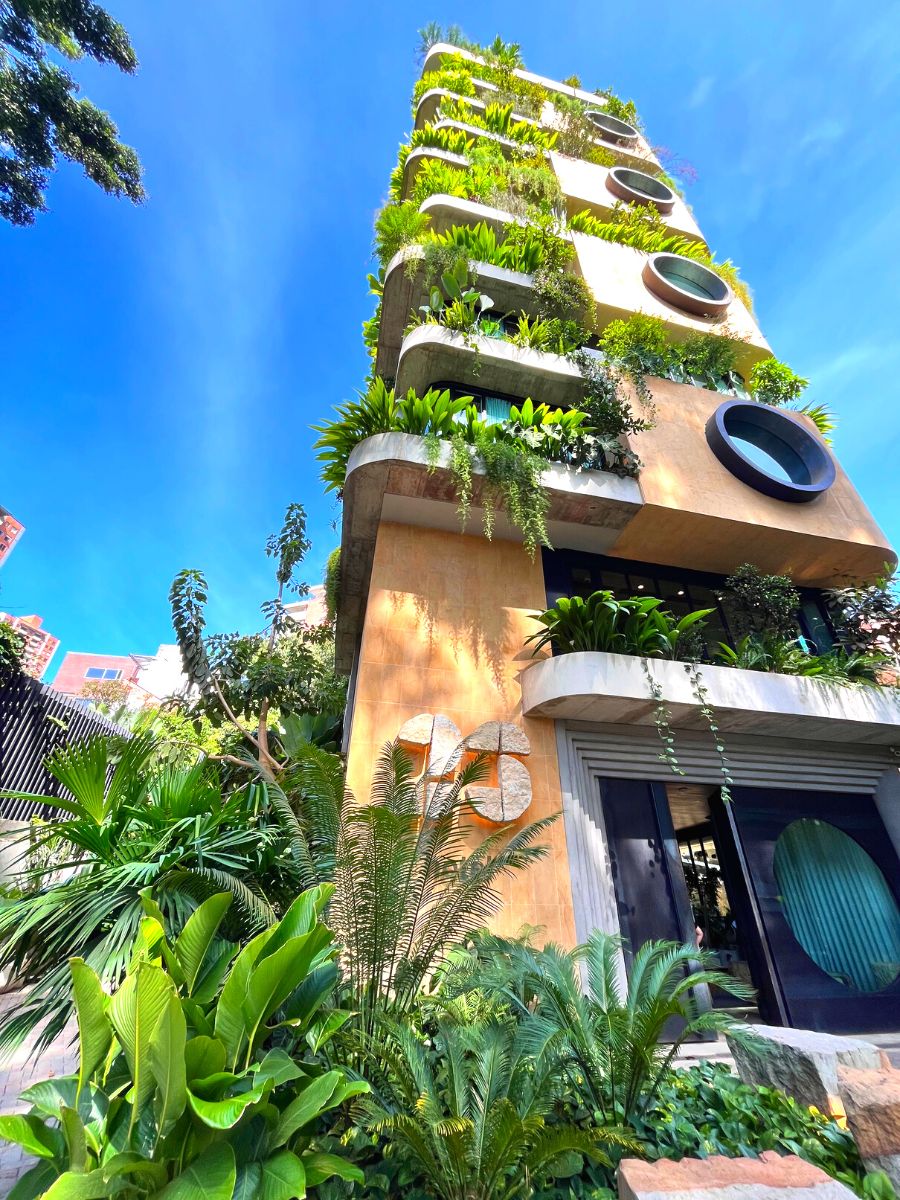
Architects introduce living walls, rooftop gardens, and interior green spaces to reintroduce nature into built environments.
B. Prioritizes Sustainability
-
The use of recycled and locally sourced materials, combined with energy-efficient design, reduces environmental footprints.
C. Enhances Human Interaction
-
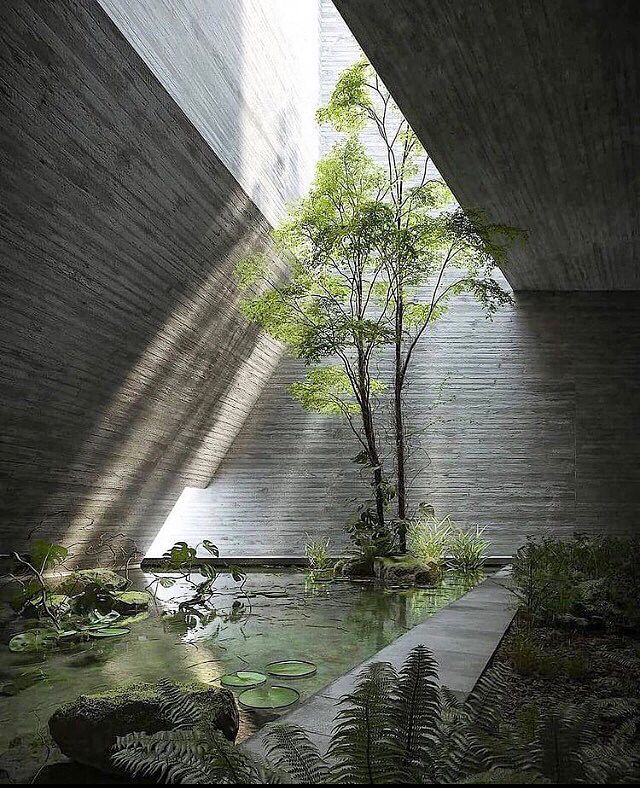
By incorporating biophilic elements, Eco-Brutalism seeks to create spaces that resonate with human needs for comfort, natural light, and connection with the outdoors.
D. Reimagines Materiality
-
While concrete remains the core material, its typically cold and raw finish is softened by organic elements, creating buildings that are both resilient and inviting.
This evolution signifies an important shift: while traditional Brutalism celebrates raw power and industrial strength, Eco-Brutalism reconfigures these qualities to foster a harmonious coexistence between human structures and the natural world.
Key Elements of Eco-Brutalism
Eco-Brutalism is defined by its ability to maintain the structural honesty and rugged aesthetics of traditional Brutalism while integrating nature in thoughtful, sustainable ways. Key characteristics include:
A. Harmonious Integration of Flora
Greenery is a cornerstone of Eco-Brutalism. The idea is not simply to attach plants as decorative elements but to weave nature into the very fabric of the structure. This can be achieved through:
A. Living Walls and Vertical Gardens
-
These installations allow plants to climb and cover the building’s facades, providing natural insulation and enhancing air quality.
B. Green Roofs
-
Rooftop gardens not only add to the aesthetic appeal but also mitigate the urban heat island effect and manage stormwater effectively.
C. Integrated Outdoor Spaces
-
Courtyards and landscaped terraces become extensions of the indoor environment, encouraging outdoor activities and social interactions.
B. Sustainable Building Practices
The environmental benefits of Eco-Brutalism go far beyond the addition of plants. Sustainability is embedded in every aspect of design:
A. Use of Eco-Friendly Materials
-
Recycled concrete, reclaimed wood, and other locally sourced materials are preferred to reduce the carbon footprint associated with building construction.
B. Energy Efficiency
-
Strategic window placements, natural ventilation, and passive solar designs reduce reliance on artificial heating and cooling systems.
C. Water Conservation
-
Systems for rainwater harvesting and greywater recycling are integrated into building designs, ensuring that the ecological impact is minimized.
C. Biophilic Design Principles
Biophilic design is based on the intrinsic human need to connect with nature. It enhances physical and mental well-being by:
A. Maximizing Natural Light
-
The structure’s orientation, window placement, and skylights are carefully designed to optimize sunlight exposure.
B. Incorporating Natural Textures and Patterns
-
Organic materials and natural forms are juxtaposed against the rigidity of concrete, creating a balanced sensory experience.
C. Creating Visual and Physical Connections with Nature
-
Open floor plans and transitional spaces blur the boundaries between indoors and outdoors, encouraging residents to engage actively with nature.
D. Adaptive and Contextual Design
Eco-Brutalism is not a one-size-fits-all solution; it adapts to the specific environmental, cultural, and climatic contexts of each project. This includes:
A. Local Climate Responsiveness
-
Designs are tailored to perform efficiently in various weather conditions, from tropical heat to temperate climates.
B. Cultural Sensitivity
-
Architects incorporate regional design traditions and cultural symbols, ensuring that the structure resonates with local inhabitants.
C. Flexible Use of Space
-
Innovative designs allow for the adaptive reuse of buildings, ensuring longevity and reducing the need for demolition and reconstruction.
Notable Global Examples of Eco-Brutalism
Eco-Brutalism has been applied across continents, each project reflecting the unique environmental and cultural contexts in which they are built. Here are a few exemplary projects that embody the movement:
A. Tiing Boutique Resort – Bali, Indonesia
The Tiing Boutique Resort is a stellar example where Eco-Brutalism shines. Architect Nic Brunsdon’s design leverages traditional techniques such as using bamboo molds to cast concrete, resulting in walls with rich textures that harmonize beautifully with the lush surroundings. This resort illustrates:
A. Material Innovation
-
By combining modern concrete techniques with traditional, sustainable practices, the resort minimizes its ecological impact.
B. Seamless Indoor-Outdoor Flow
-
The design blurs the line between interiors and exteriors, fostering a deep connection with nature.
C. Cultural Integration
-
Local materials and construction methods ensure that the architecture resonates with both visitors and the local community.
B. Mamun Residence – Chittagong, Bangladesh
Situated in a region with a distinct climatic identity, the Mamun Residence exemplifies how Eco-Brutalism can be both responsive and respectful of its environment. Inspired by the traditional hats of local farmers, the residence features:
A. Strategically Placed Openings
-
These ensure optimal ventilation, keeping interior spaces cool and reducing reliance on air conditioning systems.
B. Prolific Use of Greenery
-
The integration of plants into the design acts as natural cooling agents, creating a microclimate that is both comfortable and energy-efficient.
C. Sustainable Material Choices
-
Locally sourced construction materials blend modern techniques with traditional craftsmanship, creating a structure that is both durable and contextually sensitive.
C. Art Villa – Costa Rica
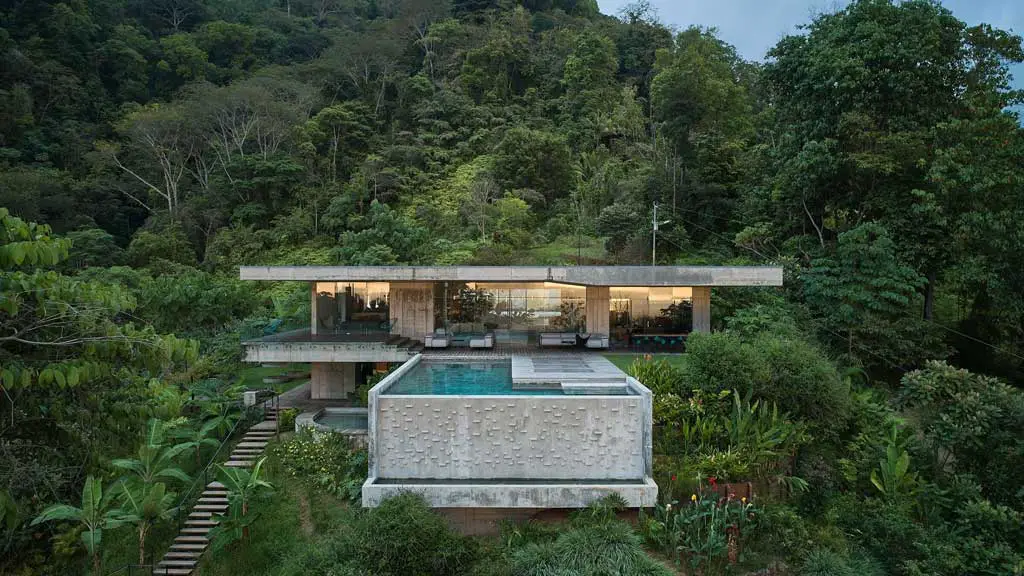
Located amidst the tropical forests of Costa Rica, Art Villa by Formafatal is a celebration of Eco-Brutalist design that merges concrete and natural textures. Key features of Art Villa include:
A. Interplay of Materials
-
The use of raw concrete paired with softer materials like wood and natural textiles creates a dynamic contrast that is both visually appealing and functionally efficient.
B. Indoor-Outdoor Connectivity
-
Expansive glass walls and open-plan layouts ensure that the building seamlessly integrates with its natural surroundings, maximizing views and natural light.
C. Sustainability at its Core
-
The design incorporates renewable energy systems, water conservation measures, and green landscaping, underscoring a commitment to environmental stewardship.
D. Jungle House – Guarujá, Brazil
Architect Marcio Kogan’s Jungle House stands as a testament to the fusion of stark architectural elements with the vibrancy of nature. Key design aspects include:
A. Multiple Terraces and Green Roofs
-
The inclusion of layered outdoor spaces, such as terraces and green rooftops, fosters an organic connection with the surrounding rainforest environment.
B. Natural Ventilation and Lighting
-
Innovative design strategies ensure optimal airflow and abundant natural light, contributing to a sustainable living environment.
C. Structural Adaptability
-
The home is designed to evolve with its environment, allowing for future modifications and adaptive reuse while preserving its ecological essence.
Environmental and Societal Impacts
The marriage of Brutalist architecture with sustainable practices creates significant benefits that extend beyond aesthetics. Eco-Brutalism is proving to be a catalyst for environmental improvement and social well-being.
A. Environmental Sustainability
Eco-Brutalism’s commitment to sustainability is evident in several areas:
A. Energy Efficiency
-
The extensive use of natural ventilation, daylight optimization, and passive solar heating/cooling results in dramatically reduced energy consumption.
B. Reduction in Carbon Footprint
-
By utilizing recycled materials and locally sourced supplies, these projects lower the emissions associated with transportation and manufacturing.
C. Biodiversity Enhancement
-
Incorporating plant life into building structures creates microhabitats that support local flora and fauna, increasing urban biodiversity.
D. Water Management
-
Innovative water recycling systems and rainwater harvesting reduce water wastage, ensuring that the urban ecosystem can manage resources more effectively.
B. Social and Psychological Benefits
The integration of nature into daily living can have profound effects on the people who occupy these spaces. Eco-Brutalism addresses several social dimensions:
A. Enhanced Mental Health
-
Studies show that regular exposure to natural elements can reduce stress levels, improve mood, and increase overall mental well-being.
B. Community Engagement
-
Open, green spaces foster social interactions, encouraging community activities and stronger neighborhood ties.
C. Cultural Resonance
-
By incorporating local traditions and materials, Eco-Brutalism helps create a sense of place and identity, reinforcing the cultural heritage of communities.
D. Healthy Living Environments
-
Improved air quality through natural ventilation and greenery contributes to overall healthier indoor environments.
C. Economic Implications
While initial construction costs for sustainable buildings may be higher due to advanced design and integration of green technologies, the long-term benefits offer significant returns:
A. Operational Savings
-
Energy and water efficiency translate into reduced maintenance and utility costs over time.
B. Increased Property Value
-
The growing demand for environmentally responsible construction has led to higher market values for properties that incorporate sustainable technologies.
C. Job Creation in Green Sectors
-
The adoption of sustainable materials and technologies stimulates local industries and creates job opportunities in eco-friendly construction and landscaping.
Design Strategies for Implementing Eco-Brutalism
For architects and builders interested in adopting Eco-Brutalism, several design strategies can serve as guidelines. Successful implementation involves a careful balance of form, function, and sustainability, ensuring that each element contributes to a holistic environment.
A. Material Selection and Usage
Choosing appropriate materials is crucial in Eco-Brutalist design. Considerations include:
A. Recycled and Reclaimed Materials
-
Use repurposed concrete, reclaimed wood, and other recycled elements that reduce environmental waste.
B. Local Sourcing
-
Prioritize materials that are available locally to minimize transportation emissions and support the regional economy.
C. Durability and Aesthetics
-
Combine the strength of concrete with softer, organic finishes—such as stone or natural fibers—to create structures that are both robust and inviting.
B. Architectural Form and Structure
Eco-Brutalism can be manifested through various structural designs. Key design strategies include:
A. Layered Structures
-
Use multiple spatial layers, such as mezzanines, terraces, and green roofs, to create dynamic interactions between different parts of the building.
B. Open and Flexible Floor Plans
-
Design open-plan interiors that can adapt over time, providing spaces that are both functional and conducive to community interaction.
C. Integration of Natural Light and Air
-
Incorporate expansive windows, skylights, and open corridors to invite natural light and enable efficient natural ventilation.
C. Landscaping and Ecological Integration
The landscape design is as integral to Eco-Brutalism as the building itself. Effective landscaping can include:
A. Continuous Green Networks
-
Develop interconnected green spaces that facilitate pedestrian flow and create natural corridors for wildlife.
B. Edible Landscapes
-
Integrate community gardens and edible landscapes that not only beautify the space but also contribute to local food security.
C. Water and Soil Management Systems
-
Implement advanced systems for water retention and soil stabilization, ensuring that the ecological integration is sustainable and beneficial.
D. Technological Integration
Incorporating modern technology can further enhance the environmental performance of Eco-Brutalist structures. Consider integrating:
A. Smart Building Systems
-
Use automation and sensor technologies to monitor energy consumption, air quality, and overall building performance.
B. Renewable Energy Solutions
-
Integrate photovoltaic panels, wind turbines, and other renewable energy sources to minimize dependency on non-renewable resources.
C. Data-Driven Design
-
Employ simulation tools and performance analysis during the design phase to optimize building orientation, shading, and climate responsiveness.
Future Prospects of Eco-Brutalism
As the world grapples with climate change and rapid urbanization, the future of architecture is inevitably linked to sustainability. Eco-Brutalism offers a blueprint for future developments, combining the functional robustness of traditional Brutalism with the life-affirming qualities of nature. Here are several aspects that underscore its potential:
A. Evolving Urban Landscapes
Urban areas worldwide are increasingly seeking solutions to reduce pollution, manage heat, and enhance the quality of life. Eco-Brutalism can serve as a catalyst for revitalizing cities by:
A. Transforming Neglected Areas
-
Old industrial sites and abandoned buildings can be repurposed using Eco-Brutalist methods to create vibrant community centers and green corridors.
B. Encouraging Mixed-Use Developments
-
Combining residential, commercial, and recreational spaces in one cohesive design can lead to more resilient urban ecosystems.
C. Promoting Environmental Accountability
-
As cities adopt stricter environmental guidelines, Eco-Brutalism provides a viable method to comply with sustainability mandates while maintaining architectural integrity.
B. Interdisciplinary Collaboration
The success of Eco-Brutalism relies on collaboration among various disciplines:
A. Architects and Urban Planners
-
Together, they can design spaces that are both aesthetically unique and environmentally efficient.
B. Engineers and Sustainability Experts
-
Innovations in materials science and renewable technologies drive the evolution of Eco-Brutalism, merging form with function seamlessly.
C. Landscape Designers and Ecologists
-
Their expertise ensures that the integration of green spaces is not only decorative but also ecologically beneficial.
C. Research and Innovation
Ongoing research in materials science, climate-responsive design, and renewable technologies is set to further enhance the principles of Eco-Brutalism. Future directions might include:
A. New Concrete Formulations
-
Development of low-carbon concrete alternatives that maintain the hallmark aesthetics of Brutalism.
B. Advanced Green Technologies
-
Incorporation of vertical farming systems and smart irrigation that adjust to real-time weather data.
C. Adaptive Reuse Methodologies
-
Innovative approaches to transforming outdated structures into sustainable, multi-purpose hubs for community and commerce.
Cultural Impact and Social Resonance
Beyond its physical attributes, Eco-Brutalism has significant cultural implications. By bridging the gap between industrial modernity and nature, it redefines our living spaces and brings communities closer together.
A. Revitalizing Community Identity
Eco-Brutalism can help reinforce local identity by:
A. Celebrating Regional Characteristics
-
Integrating local art, materials, and traditions, thereby creating structures that resonate with the community’s cultural heritage.
B. Providing Inclusive Public Spaces
-
Offering areas where people from diverse backgrounds can gather, interact, and feel a sense of belonging.
C. Encouraging Social Activism
-
As sustainable living becomes a shared goal, these buildings can become centers for social innovation and community-driven environmental initiatives.
B. Psychological and Health Benefits
The positive impact of nature on mental and physical health is well-documented. Eco-Brutalism leverages these benefits through design:
A. Stress Reduction
-
Exposure to greenery and natural elements has been shown to reduce stress levels and improve overall mental health.
B. Improved Physical Activity
-
Outdoor spaces and accessible green areas encourage exercise, walking, and outdoor recreation.
C. Enhanced Creativity and Productivity
-
Work environments that include natural elements tend to stimulate creativity and boost productivity, benefiting both individuals and organizations.
C. Shaping Modern Aesthetics
Eco-Brutalism influences not only how buildings are constructed but also how they are perceived by the public. Its hallmark blend of industrial strength with nature’s vitality provides a refreshing alternative to the sterility of conventional urban design. This synthesis:
A. Promotes a Sense of Authenticity
-
The visible expression of construction methods combined with natural elements gives buildings a transparent, honest quality.
B. Invites Aesthetic Experimentation
-
Architects and designers are encouraged to experiment with hybrid forms, challenging traditional boundaries between nature and the built environment.
C. Sets a New Standard for Sustainability
-
As environmental awareness grows, Eco-Brutalism stands as a benchmark for sustainable architecture that does not compromise on visual impact.
Case Studies: In-Depth Exploration
To illustrate the transformative potential of Eco-Brutalism, let’s delve into a few detailed case studies that exemplify its principles in practice.
A. Urban Renewal Through Eco-Brutalism
Consider a city facing the dual challenges of urban decay and rising environmental concerns. By applying Eco-Brutalist principles, local governments and developers can:
A. Redevelop Abandoned Structures
-
Convert dilapidated industrial warehouses into vibrant community centers with integrated green spaces that serve as hubs for environmental education and social activism.
B. Enhance Public Infrastructure
-
Retrofit existing concrete structures with green roofs, living facades, and energy-efficient systems, thereby transforming them into sustainable landmarks.
C. Foster Economic Growth
-
Attract new investments and boost local economies through the creation of multipurpose spaces that blend commerce, culture, and ecology.
B. Educational Institutions Embracing Eco-Brutalism
Many universities and research centers are now adopting Eco-Brutalist designs to create environments that stimulate both learning and sustainable practices. In these settings:
A. Campus Buildings Serve as Living Laboratories
-
The integration of green technologies and sustainable materials allows students and researchers to study building performance and environmental impact in real time.
B. Promoting a Culture of Sustainability
-
Green campuses set an example for future developments, instilling values of environmental stewardship in the upcoming generation of architects, engineers, and urban planners.
C. Engagement with Nature Enhances Academic Performance
-
Studies suggest that students exposed to natural settings exhibit improved concentration, creativity, and overall academic performance, further justifying the incorporation of Eco-Brutalism in educational environments.
Challenges and Solutions
Despite its clear advantages, the pathway to wide adoption of Eco-Brutalism is not without obstacles. Addressing these challenges requires innovation, collaboration, and a deep commitment to sustainability.
A. Structural and Maintenance Concerns
One of the primary challenges is ensuring that the integration of greenery does not compromise structural integrity or lead to unforeseen maintenance issues:
A. Balancing Load and Growth
-
Structural engineers must devise methods to support the weight of living walls and rooftop gardens without overburdening the building’s framework.
B. Ongoing Maintenance Costs
-
While greenery provides numerous benefits, it also requires regular upkeep. Solutions include automated irrigation systems and community-driven maintenance programs to share the responsibility.
C. Durability of Materials
-
Research into innovative, weather-resistant materials that can mimic the raw appearance of concrete while resisting decay is essential to the longevity of Eco-Brutalist buildings.
B. Climate-Specific Adaptations
Eco-Brutalism must be adaptable to a wide range of climatic conditions:
A. Tailored Plant Selection
-
In different regions, the selection of flora must be based on local climate, soil conditions, and available water resources to ensure that vegetation can thrive without excessive resource input.
B. Flexible Design Models
-
Modular and adaptive design strategies allow for modifications as climate patterns change, ensuring that buildings remain efficient and sustainable over their lifecycles.
C. Integration of Smart Climate Controls
-
Incorporating sensor networks and responsive building management systems can help dynamically adjust energy use and environmental settings within the structure.
The Socio-Economic Ripple Effect
Adopting Eco-Brutalism does not only benefit the environment; it also generates broad socio-economic impacts that ripple through communities and industries.
A. Boosting Local Economies
The implementation of sustainable architectural practices can bolster local economies in several ways:
A. Job Creation in Green Construction
-
By embracing green building technologies and sustainable materials, local industries benefit from new business opportunities and job creation.
B. Attraction of Eco-Conscious Investors
-
As consumer demand shifts towards sustainability, investors are increasingly interested in projects that promise both environmental and economic returns.
C. Enhancement of Community Well-Being
-
Green spaces and environmentally friendly design contribute to improved community health and engagement, indirectly supporting local businesses and communal activities.
B. Education and Awareness
Eco-Brutalism serves as a visual and functional model for sustainability, spreading educational benefits that extend beyond the architectural realm:
A. Workshops and Community Programs
-
Buildings designed with Eco-Brutalist principles often become centers for workshops, exhibitions, and community events focused on sustainability and environmental responsibility.
B. Inspiring Future Generations
-
Exposure to innovative, eco-friendly design elements encourages future architects, designers, and engineers to prioritize sustainability in their work.
C. Collaborative Research Opportunities
-
Institutions that integrate Eco-Brutalism create fertile ground for interdisciplinary research, combining fields such as urban planning, ecology, engineering, and social sciences.
Conclusion
Eco-Brutalism stands at the crossroads of aesthetic innovation and environmental responsibility. By redefining the boundaries of traditional Brutalism, this architectural movement provides a promising solution to many of the challenges faced by contemporary society. Its integration of sustainable practices, biophilic design, and adaptive reuse creates spaces that are not only structurally resilient but also deeply connected to the natural world.
In reimagining urban spaces and fostering community engagement, Eco-Brutalism offers a template for future developments that prioritizes environmental stewardship and social well-being. As we move forward, the continued exploration of new materials, technologies, and design philosophies will no doubt further refine and expand the reach of Eco-Brutalism, ensuring that our cities become livable, vibrant, and in harmony with nature.