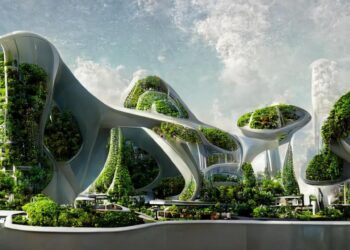






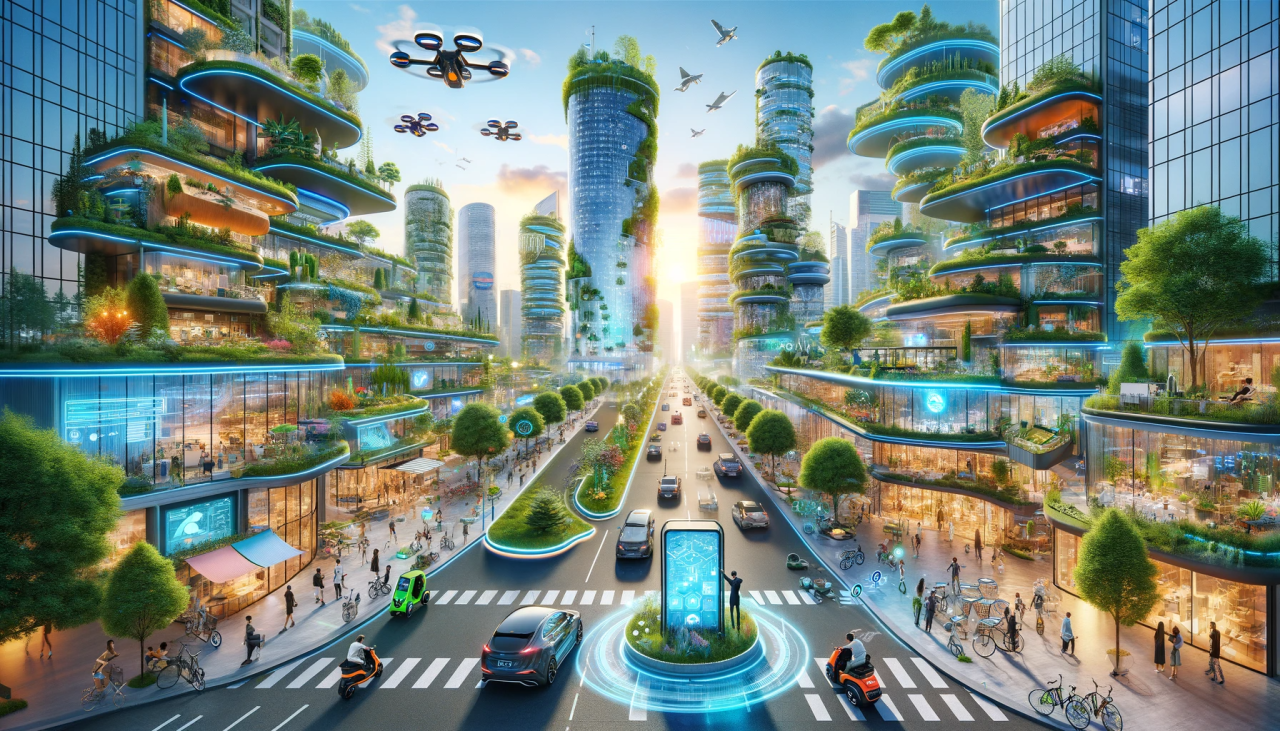


As urban populations explode, smart city technologies are evolving from experimental concepts to essential infrastructure. By 2050, 68% of the world’s population will live in cities, demanding revolutionary approaches to sustainability, mobility, and livability. This 2,500-word investigation reveals seven groundbreaking visions transforming how we design, build, and experience urban environments – from AI-powered traffic systems to vertical forests that combat climate change.
A. The Urgent Case for Smart City Innovation
-
Demographic Time Bomb
-
Urban areas will absorb 2.5 billion new residents by 2050
-
Current infrastructure can only support 60% of projected needs
-
-
Climate Imperatives
-
Cities generate 70% of global CO₂ emissions
-
Rising temperatures could cost urban economies $7.4 trillion by 2100
-
-
Technological Tipping Point
-
5G networks enabling real-time city management
-
IoT sensors now 80% cheaper than 2015
-
B. Vision 1: The Self-Healing Metropolis
Next-Gen Infrastructure
-
Smart Concrete: Embedded nanoparticles detect and repair cracks
-
AI Maintenance Systems: Predicting potholes 3 months before they form
Economic Impact
-
Could reduce infrastructure costs by $1.2 trillion annually
-
London’s “digital twin” project already saving £100M/year
![BIM & Smart Cities for Urban Planning [3/3]](https://media.licdn.com/dms/image/v2/D4E12AQGMDbU_OAhu3g/article-cover_image-shrink_720_1280/article-cover_image-shrink_720_1280/0/1700402151501?e=2147483647&v=beta&t=3juO4oVUXpHGBAhzL6LZH4l-CGRxhCpN9Qd0YGxffN4)
C. Vision 2: The 15-Minute City Revolution
-
Paris Leading the Charge
-
50% of streets transformed for pedestrians/bikes
-
650 “school streets” banning cars at drop-off times
-
-
Economic Benefits
-
Local business revenue up 23% in pilot zones
-
40% reduction in childhood asthma cases
-
D. Vision 3: Vertical Urban Forests
Architectural Breakthroughs
-
Stefano Boeri’s Milan towers host 20,000 plants
-
Singapore’s “forest towns” feature 40% green cover
Environmental Payoff
-
Equivalent to 10,000 m² of horizontal forest per tower
-
35% better air quality than conventional high-rises
E. Vision 4: The AI Traffic Ecosystem
-
Pioneering Examples
-
Hangzhou’s “City Brain” reduced congestion by 15%
-
Pittsburgh’s smart signals cut travel time 25%
-
-
Coming Innovations
-
Vehicle-to-infrastructure communication rolling out in 2025
-
Drone-powered traffic monitoring becoming standard
-
F. Vision 5: Underground Urbanism
Space-Saving Solutions
-
Helsinki’s 200km subterranean service network
-
Montreal’s underground city spans 32km
Climate Advantages
-
50% less energy needed for temperature control
-
Protects infrastructure from extreme weather
G. Vision 6: Circular Resource Cities
-
Water Revolution
-
Copenhagen’s rainwater harvesting meets 30% of needs
-
Tokyo’s sewage heat recovery warms 10,000 homes
-
-
Waste Transformation
-
Amsterdam’s household waste becomes 3D printer filament
-
San Francisco diverts 80% from landfills
-
H. Vision 7: Democratic City Brains
Citizen-Led Governance
-
Barcelona’s digital democracy platform with 200,000 users
-
Helsinki’s AI co-design tools for urban planning
Transparency Benefits
-
60% reduction in corruption cases where implemented
-
45% higher satisfaction with public services
I. Overcoming Implementation Challenges
-
Funding Models
-
Singapore’s public-private partnerships blueprint
-
NYC’s smart city bond program
-
-
Privacy Protections
-
EU’s strict urban data regulations
-
Anonymization techniques for sensor data
-
-
Workforce Transitions
-
Reskilling programs for traditional urban jobs
-
New “city data analyst” roles growing 300% annually
-
Conclusion
These seven bold visions demonstrate that smart cities represent more than technological upgrades – they’re complete reimaginings of urban life. While challenges remain, early adopters prove the transformative potential of marrying innovation with ambitious planning. The cities embracing these concepts today will dominate economically, environmentally, and socially in the coming decades.
Tags: smart city future, urban innovation, sustainable cities, IoT infrastructure, AI traffic systems, circular cities, vertical forests, 15-minute city, urban planning, smart governance